
Program overview
This is a two-year fellowship in medical and surgical diseases of the retina and vitreous, sponsored by an independent, five-surgeon subspecialty practice serving Central New York since 1972. Fellows are based primarily at our Syracuse office, where our affiliated hospital and ambulatory surgery center are located, with exposure to the practice's regional satellite offices.
The two years are structured as a clinical and surgical continuum with a deliberate shift toward surgical volume and autonomy, particularly in the second year. Fellows progress from structured clinical evaluation and in-office procedures to primary-surgeon responsibility across the practice's operative case mix. An active clinical research program rounds out the training environment. Fellows also staff retina clinics at SUNY Upstate Medical University, where they work with and teach ophthalmology residents — adding a teaching dimension and a different patient mix to the two years.
Current fellow
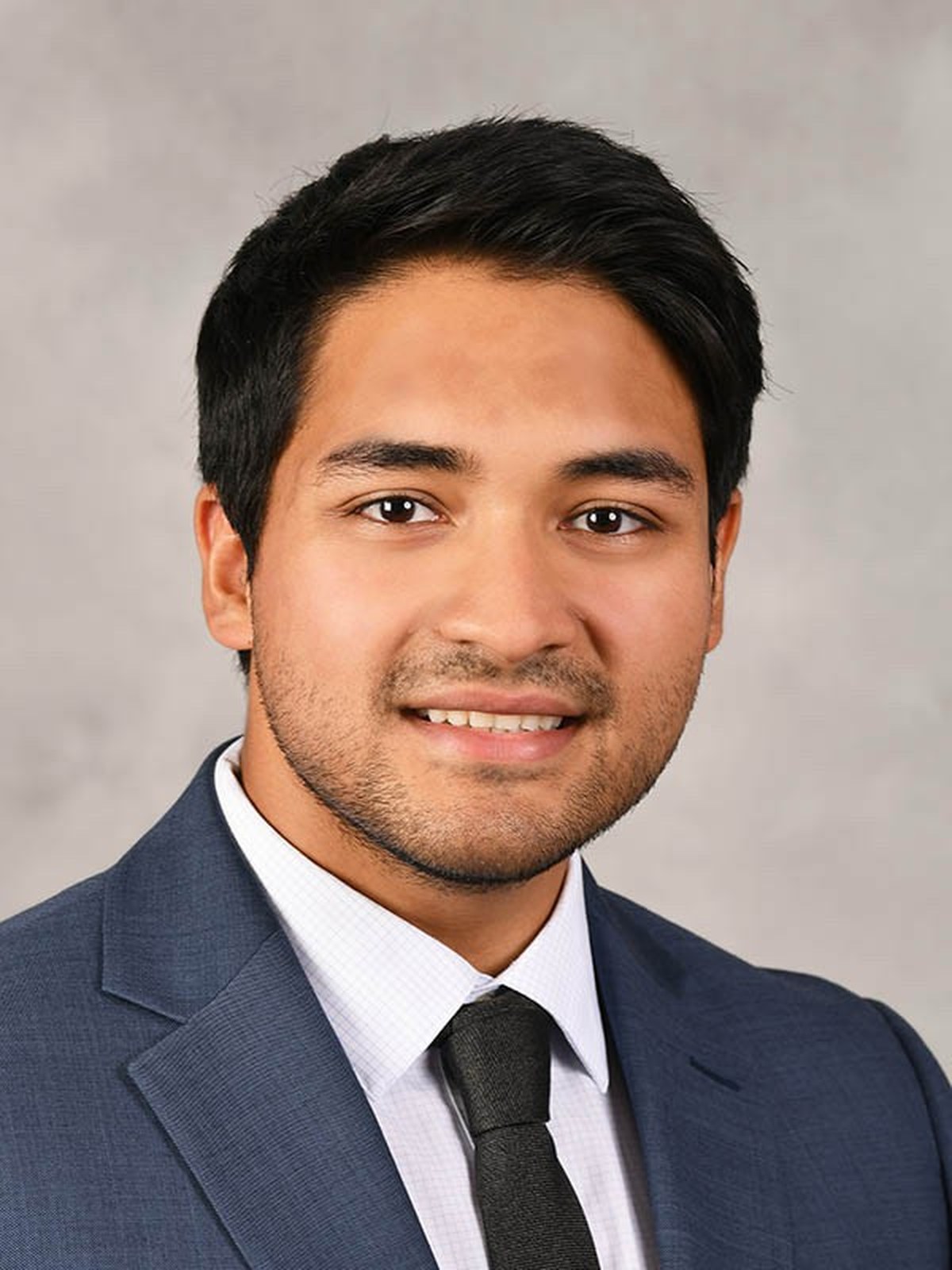
Dr. Choudhury completed his undergraduate studies at Stony Brook University and both medical school and ophthalmology residency at SUNY Upstate Medical University before joining the practice as our inaugural vitreoretinal surgery fellow.
Surgical training
Surgical experience is the center of this program. The practice performs on the order of 1,200 operative cases a year across five surgeons; the fellow scrubs on a substantial number of these cases and, for many of the cases they are involved in, advances to primary surgeon before the start of the second year. Progression is graduated and tied to demonstrated competency and patient-safety metrics.
The operative mix is broad and weighted toward complex pathology, including:
- Complex and recurrent retinal detachments, including proliferative vitreoretinopathy
- Tractional retinal detachments and advanced diabetic vitreoretinopathy
- Scleral buckling, both primary and combined
- Macular hole and epiretinal membrane surgery
- Secondary intraocular lens procedures, including IOL exchange and repositioning
- Vitreous hemorrhage, dropped lens material, and endophthalmitis
Fellows participate in the full perioperative arc — case selection and preoperative planning, imaging review and instrumentation choice, intraoperative performance, complication management, and postoperative care.
Clinical training
Clinical training builds the diagnostic and decision-making foundation that surgical judgment depends on. Fellows act as primary providers in the outpatient setting under faculty supervision, carrying a mix of new referrals, longitudinal medical-retina patients, and urgent work-ins for flashes, floaters, acute vision loss, and postoperative concerns.
The clinical experience spans the breadth of medical retina — neovascular AMD, diabetic macular edema and retinopathy, retinal vascular occlusions, geographic atrophy, uveitis, and inherited and acquired maculopathies — with heavy use of multimodal imaging and in-office intravitreal injections, laser, and minor procedures. Fellows also participate in a graduated on-call schedule appropriate to their training level, evaluating and triaging retinal emergencies.
Mentorship & faculty
Fellows are mentored by five fellowship-trained vitreoretinal surgeons with distinct training pedigrees and clinical styles. Fellows are exposed to a range of techniques, decision frameworks, and perspectives on complex disease and practice management.
All five faculty hold appointments as Clinical Assistant Professors at SUNY Upstate Medical University, where the practice teaches medical students and ophthalmology residents.
Research & scholarship
The practice runs an active clinical research program, and the fellow is directly involved in enrolling and following patients on active trials. Current studies span neovascular AMD, diabetic macular edema, non-proliferative diabetic retinopathy, and geographic atrophy, and include both industry-sponsored and investigator-initiated protocols. View our active trials →
On the academic side, each fellow is expected to complete at least one scholarly product a year — a poster, platform presentation, peer-reviewed manuscript, book chapter, or substantive quality-improvement project. Fellows also play an active role in teaching ophthalmology residents, and can pursue scholarly projects with the assistance of residents and medical students.
The operational side of private practice
Fellows who are interested also have the opportunity to learn how an independent retina practice actually runs. With the partners' involvement, this can include the economics of a private group, payer contracting, coding and compliance, staffing and clinic workflow, and the decisions behind adding technology, sites, and clinical trials. For a fellow planning to enter or build a private practice, it is a valuable vantage point on the operational side of the specialty.
Technology & equipment
Our offices are equipped with a consistent imaging and diagnostic platform: optical coherence tomography (OCT), fluorescein angiography, fundus photography, fundus autofluorescence, and ocular ultrasound. OCT angiography and indocyanine green (ICG) angiography are also available for cases that call for them.
In the operating room, fellows train on both Alcon and DORC vitrectomy systems, gaining experience across both platforms.
Salary & benefits
Salary is set to the New York State PGY scale, with a step increase in the second year. The program also provides:
- Employer-paid health and dental insurance premiums for the fellow and dependents
- Participation in the practice's qualified retirement plan
- Statutory disability insurance
- Occurrence-based professional liability (malpractice) coverage, paid by the practice
- Payment of professional license, registration, and hospital medical-staff fees
- Three weeks of paid time off per year for vacation, sick, and personal leave
Eligibility
Applicants should have completed, or be completing, an ophthalmology residency and be board-eligible or board-certified in ophthalmology. Appointment is conditioned on:
- An unrestricted license to practice medicine in New York State
- Eligibility for medical malpractice coverage as required by the practice
- Approval for medical staff privileges at our affiliated hospital and facilities
- Credentialing with Medicare, Medicaid, and the practice's participating payers
Our administrative team manages hospital and surgery-center privileging and payer credentialing on the fellow's behalf and helps coordinate the New York licensure process.
How to apply
The program accepts one fellow per year. With our inaugural fellow now in training, we are actively recruiting for our next position through the SF Match ophthalmology fellowship matching program. Prospective applicants and residency program directors are welcome to reach out with questions at rvscny@rvscny.com.
Email the program Apply via SF Match
Central New York offers a genuinely livable base for training — a low cost of living, an easy commute, and quick access to the Finger Lakes and the Adirondacks — alongside the surgical volume of a busy regional referral practice.